|
Displacement behaviours
When an animal is in a state of extreme arousal but
does not have the possibility to exhibit its normal
reaction, it will respond by exhibiting an activity that
is not directly related to the context. The contexts in
which these behaviours emerge often involve conflict
(fight/flight).
These behaviours include eating grass, drinking,
self-grooming, destruction of objects, coprophagy,
digging, scratching, manipulating the environment and
playing with toys.
(Timbergen, 1952; Hubrecht et
al., 1992; Pageat, 1998; Beerda et al., 1999)
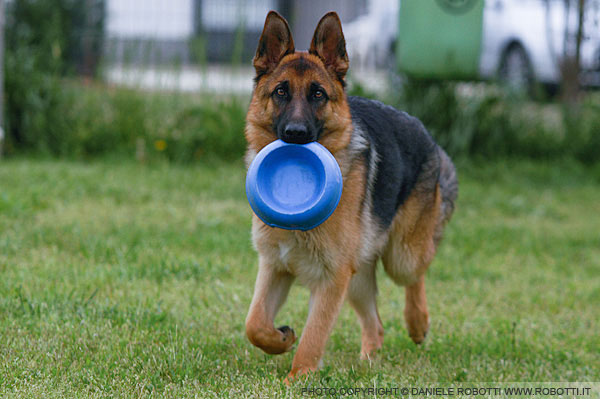
This female German Shepherd has grabbed
and is carrying a plastic food bowl, and after having
spotted the photographer is exhibiting signs of alert.
VIDEO
large
screen
Video filmed during a behavioural evaluation. The male
Pit Bull was seized by authorities during a raid that
interrupted a dog fight in a foreign country. He
exhibits mouthing and possessive behaviours towards
rocks and stones, bricks and even cement. This behaviour
probably first emerged as a displacement
activity and coping strategy under conditions
of extreme isolation and confinement, then developed
into a compulsive behaviour.
dilated
pupils<>drinking
|
